
XPANCEO is Hoping to Solve AR Contact Lens Challenge with Ultra Tiny Solid-State Batteries
- Views: 1

This post was originally published on this site
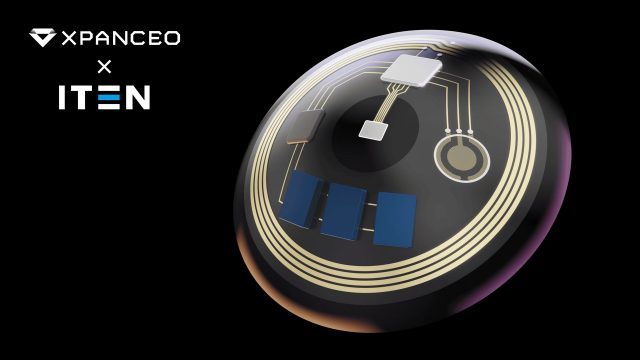
If augmented reality glasses are the future, AR contact lenses are probably a bit farther away. Still, smart contact lens startup XPANCEO says it’s hoping to address at least one of the technology’s main issues with the inclusion of miniature solid-state batteries.
In partnership with France-based solid-state battery startup ITEN, XPANCEO announced it’s developing a proof of concept AR contact lens with a built-in microbattery—something the companies hope will solve a main challenge in ocular wearables right now: conventional batteries are thick, not durable enough, and aren’t suitable to be used in in devices worn directly on the human eye.
XPANCEO has been developing smart contact lenses with AR and health monitoring capabilities since its founding in 2021. Along the way, the UAE-based unicorn has been attempting to address the sort of strict design constraints inherent to XR contact lenses, such as thickness, mass, heat generation, and material selection, with biocompatibility and user safety.
When it comes to powering smart contacts, the company says that a number of tasks can be powered by simply harvesting energy from the user’s body, like the mechanical energy from blinking, thermal differences across the lens, electrochemical reactions with tear fluid, and integrated solar cells.
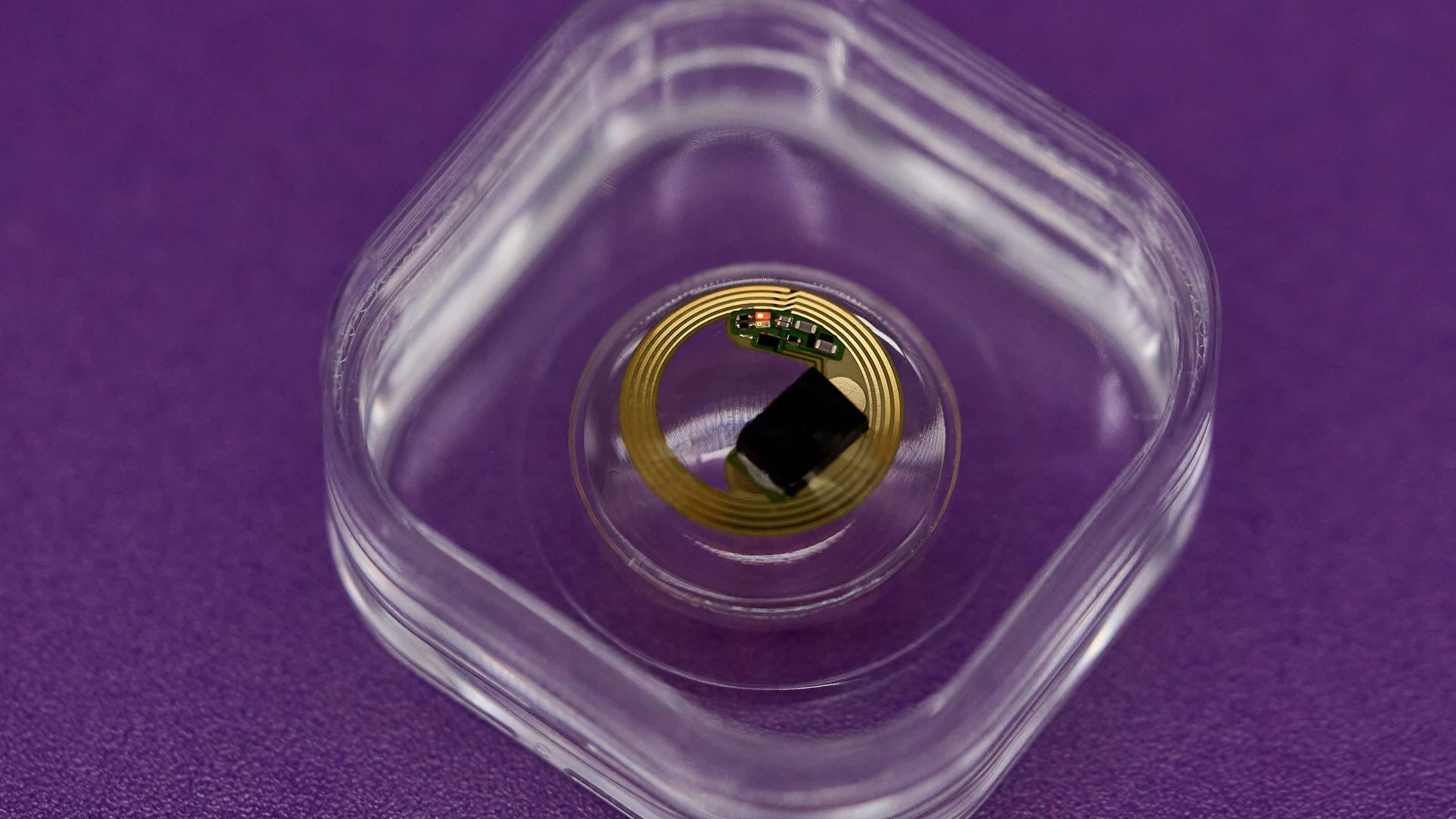
High-energy functions, like displaying AR imagery, require sustained “milliwatt-level power,” the company says, making high-density energy storage a must for future AR contacts. And at least one part of that challenge could be overcome with solid-state batteries, the companies maintain, which unlike lithium-ion cells, cannot leak, swell, or explode.
“If a failure occurs, the system simply stops supplying power. ITEN solutions can be engineered in ultra-thin, flexible formats compatible with soft contact-lens substrates, while still providing high enough power density for the short bursts of energy required by AR displays and wireless connectivity, without rapid degradation,” XPANCEO says.
Although promising, and potentially safer and more energy-dense than current battery tech, solid-state batteries are also expensive, hard to manufacture at scale, and not yet widely available despite active development by companies like Toyota and QuantumScape.
ITEN isn’t producing the sort of solid-state batteries you might find in future electric vehicles or home energy storage though; the Dardilly, France-based startup specializes in nanomaterial fabrication to produce fully ceramic electrodes with a patented “mesoporous structure”—essentially allowing small batteries to deliver higher power and charge and discharge more efficiently.
Since May 2025, ITEN has been mass-producing its first-gen solid-state ceramic microbatteries, which will find its way into XPANCEO’s in-development smart contacts.
“The ITEN–XPANCEO proof of concept demonstrates that high-power-density energy storage can now be manufactured in volume production and safely integrated into a contact lens, marking a crucial milestone in making smart contact lenses commercially viable,” XPANCEO says.
“By combining ITEN’s solid-state energy storage technology with cutting-edge smart lens innovation, the ITEN partnership with XPANCEO opens a new frontier in compact, high-power energy solutions,” adds Vincent Cobée, CEO of ITEN. “Together, we are enabling a new generation of intelligent and highly integrated systems that demand both performance and reliability—delivering power where space is limited and expectations are high, with the added assurance of full safety enabled by inherently stable, non-flammable product architecture.”
This follows XPANCEO’s latest (and largest) funding round to date, a Series A round last July which brought to the company $250 million in addition to giving it a $1.35 billion valuation.
The post XPANCEO is Hoping to Solve AR Contact Lens Challenge with Ultra Tiny Solid-State Batteries appeared first on Road to VR.
You Might Like